Fiber laser settings for 1 mm aluminium at 3 kW
Updated:
Short answer
A 3 kW fiber laser cuts 1 mm aluminium with nitrogen at 12–16 bar and 25–35 m/min. For this combination we have three regimes: the base one from the source maker’s table and two alternatives from other sources.
Aluminium cutting speed and gas pressure at 3 kW
Base regime · Aluminium · 1 mm · 3 kW
RFL-3000(50u), Cutting head focal length: Collimating 100/Focal 150
Gas
N₂
Gas pressure
12bar
Speed
25–30m/min
Power
100%
Frequency
1500–3500Hz
Duty cycle
100%
Focus
in the app
Cutting height
in the app
Nozzle
in the app
Alternative 1 · Aluminium · 1 mm · 3 kW
Raycus 3000W, Head: none
Gas
N₂ / air
Gas pressure
16bar
Speed
30m/min
Power
100%
Frequency
5000Hz
Duty cycle
100%
Focus
in the app
Cutting height
in the app
Nozzle
in the app
Alternative 2 · Aluminium · 1 mm · 3 kW
MAX MFSC-3000X-50um, Head: none
Gas
N₂ / air
Gas pressure
16bar
Speed
35m/min
Power
100%
Frequency
5000Hz
Duty cycle
100%
Focus
in the app
Cutting height
in the app
Nozzle
in the app
Which regime to start with
- Base regime. The starting point for most 3 kW machines, from the source maker’s own table.
- Alternative 1. Faster: 30 m/min against 25–30 m/min. Gas pressure 4 bar higher. Source: Raycus 3000W, Head: none. Try it when the cut is clean and you want more speed; if the edge gets worse, go back to the base regime.
- Alternative 2. Faster: 35 m/min against 25–30 m/min. Gas pressure 4 bar higher. Source: MAX MFSC-3000X-50um, Head: none. Try it when the cut is clean and you want more speed; if the edge gets worse, go back to the base regime.
Cutting time and gas consumption per metre
At these speeds one metre of cut takes about 2 seconds. Nitrogen flow through the nozzle is about 16.6–38.6 m³ per hour, or 9–18 litres per metre of cut, not counting piercing.
Aluminium cutting speed chart: neighbouring thickness and power
| Thickness · power | Gas | Speed, m/min |
|---|---|---|
| 1 mm · 2 kW | N₂ / air | 20 |
| 1 mm · 3 kW | N₂ | 25–30 |
| 1 mm · 4 kW | N₂ | 25–30 |
| 1 mm · 6 kW | N₂ | 30–45 |
| 2 mm · 3 kW | N₂ | 15–18 |
| 3 mm · 3 kW | N₂ | 7–8 |
Common aluminium cutting defects with nitrogen
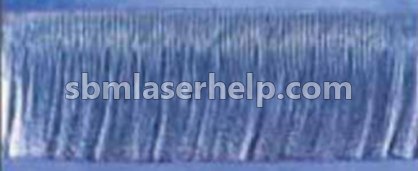
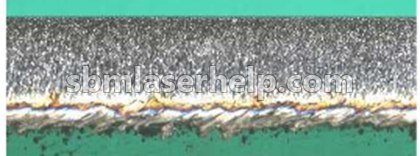
Not sure which one you have? Send a photo of the edge to the app and it names the defect and the fix.
Related questions
- What is the thickest aluminium a 3 kW fiber laser cuts?
- Our tables go up to 10 mm aluminium at 3 kW, at 0.4 m/min with nitrogen or air. The next thickness, 12 mm, starts from 4 kW.
- Why is the speed a range?
- Sheet surface, aluminium grade, gas purity and pressure at the nozzle and the state of the protective window all shift the result. Start at the lower value, make a test cut and raise the speed in 5% steps while the bottom edge stays clean.
- Where are focus, cutting height and nozzle?
- They depend on the cutting head and lens, so a single number is often wrong for your machine. The app shows the full regime and fits it to the machine you add to your profile.